
Peripheral Equipment
Plant packages
It’s easy to focus too much on the main pyrolysis reactor but, like any high-performing team, a plant is only successful with the right additional equipment in place.
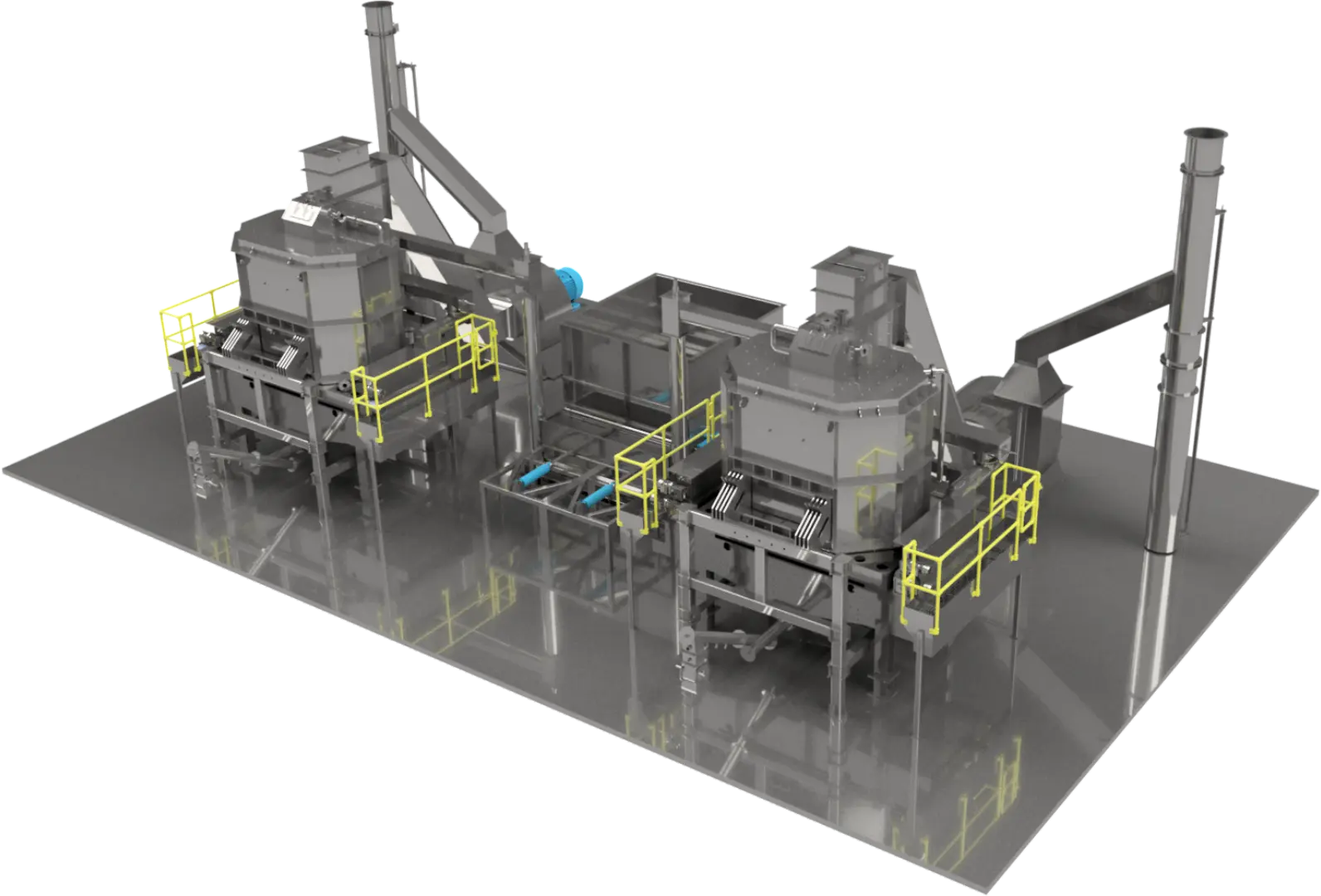
Principles
As with our CarboFlow unit, our peripheral equipment is selected for its suitability, quality and value for money, to ensure that the whole plant runs smoothly and reliably, without the need for bespoke design and implementation.

Proven
Our packages use proven components which inter-operate reliably.

Quality
By working with high quality fabricators we ensure quality and durability.

Value for money
Minimizing bespoke requirements delivers cost savings without impacting quality.
From feedstock to biochar
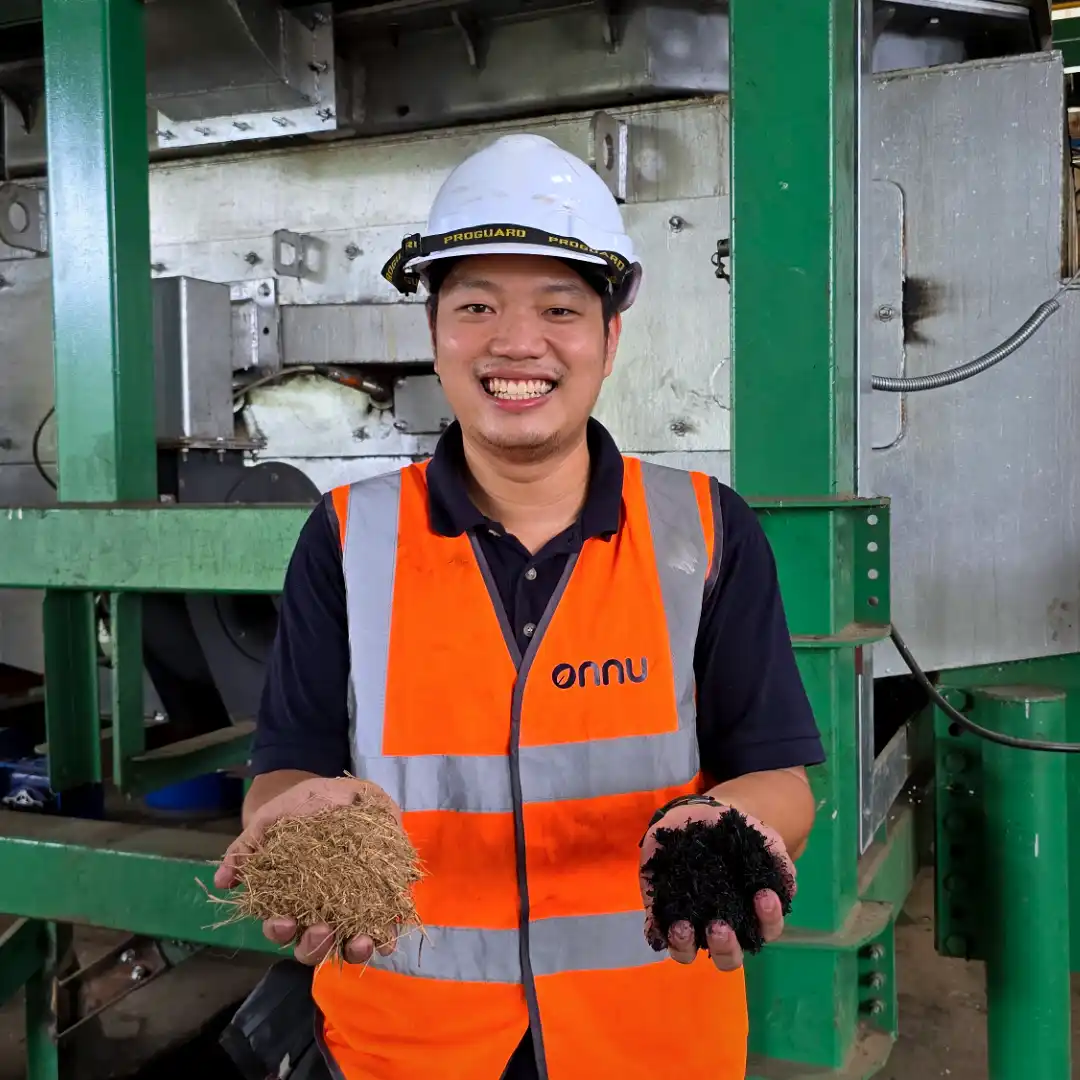
Our standard packages deliver all that is needed from the receipt of suitably processed and dried feedstock, through the pyrolysis process to biochar discharge to a bunker.
Upstream equipment such as chipper or dryer, and biochar bagging systems can be added as part of of a site specific design.
With CarboFlow at the core, we can deliver the right peripheral equipment to ensure optimal performance within your budget.
Plant packages and layout
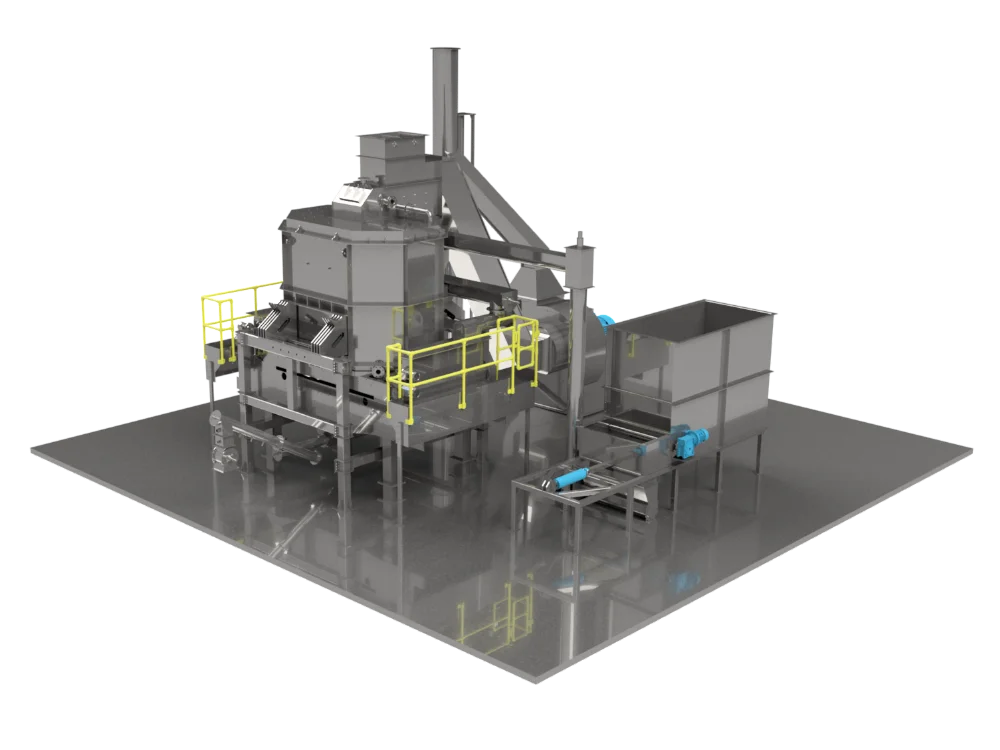
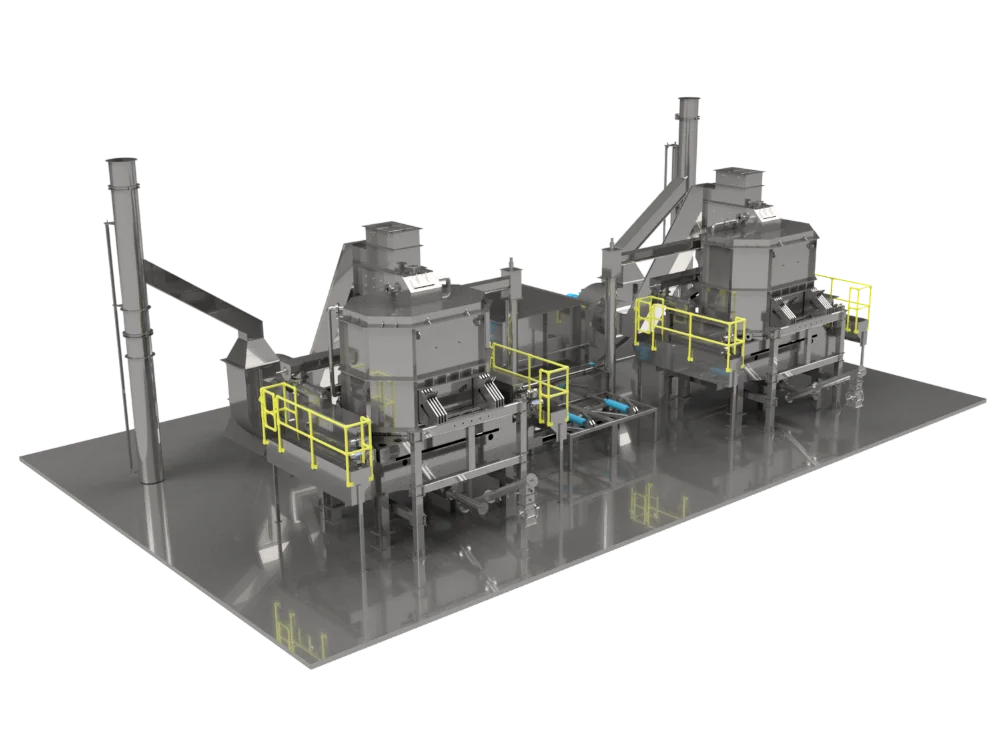
Our standard one and two unit plant packages are laid out to make the most efficient use of space, while allowing room to work and all necessary maintenance access.
Standard Package Contents
These pieces of plant and equipment are essential to any pyrolysis operation and ensure smooth operation, from feedstock in to biochar out.
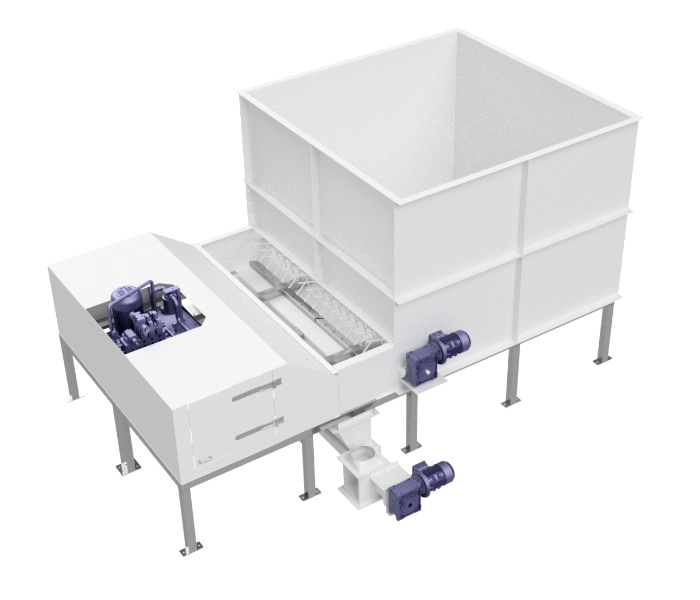
Feed Bunker
Our specialized walking-floor feed bunker ensures consistent and regular delivery of feedstock into the pyrolysis process.
It also acts as a buffer between the pre-processing and drying in case of stoppages or differing speeds.
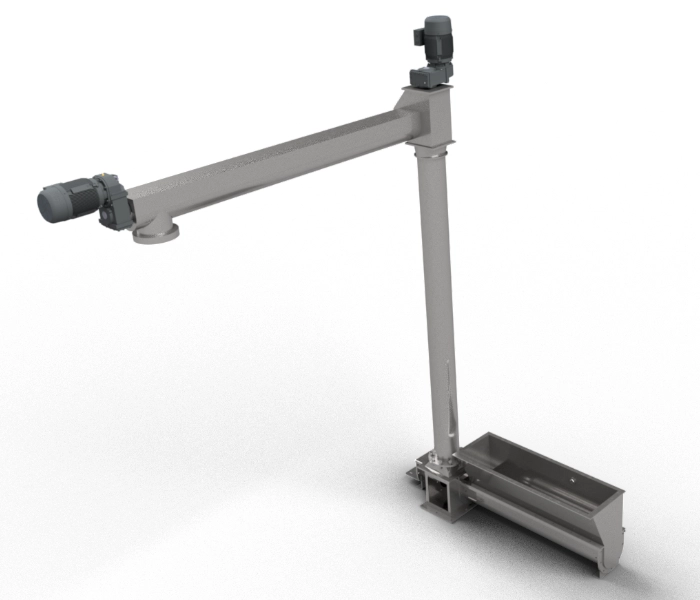
Screw Conveyor
Our standard package comes with fit for purpose screw conveyors to move feedstock from the feed bunker into the CarboFlow unit(s).

CarboFlow
The core of the plant, our proprietory pyrolysis unit, CarboFlow.
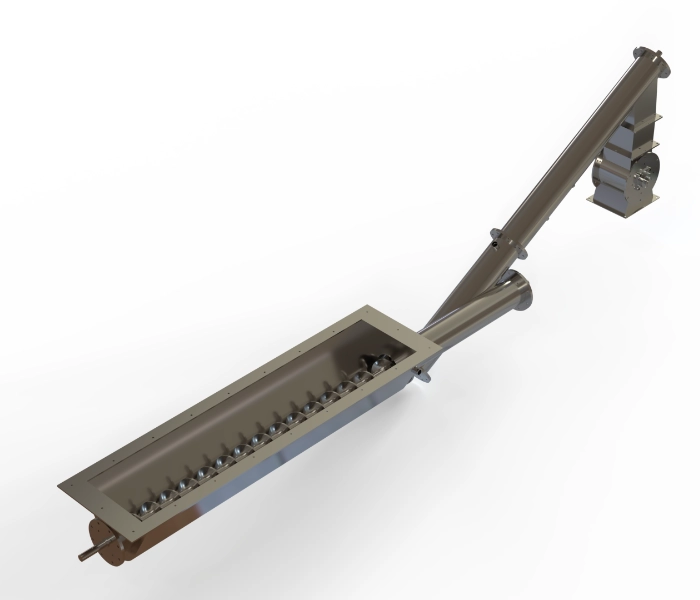
Biochar Discharge
Our biochar discharge cools and quenches the outputted biochar to a safe temperature for exit. It can then be directed into a bunker or an automated bagging system as required.
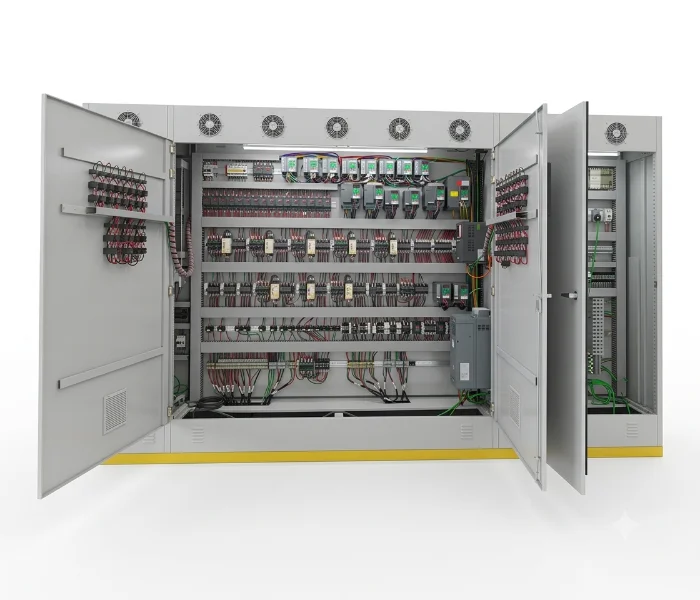
PLC Cabinet
All of the electrical connections, controls and sensors are unified on the PLC controls, accessed onsite as well as remotely via a browser.
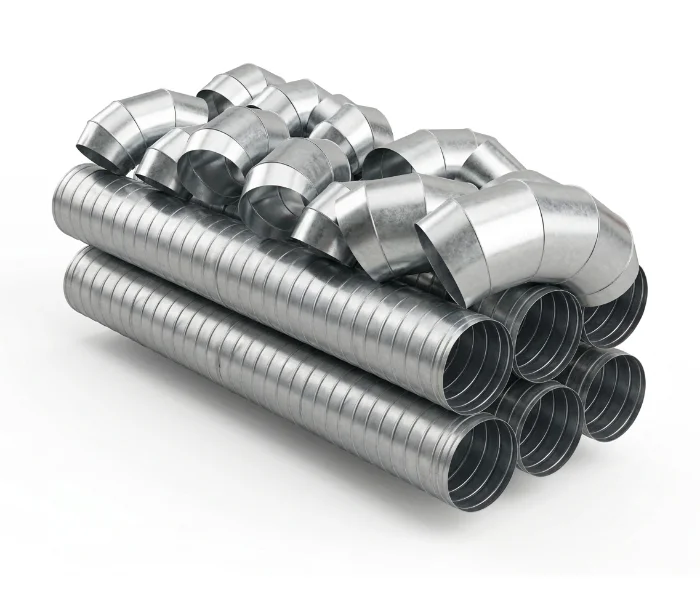
Flue Stacks & Ducting
Flue stacks and ductings are steel bodies that safely convey exhaust gases from the reactor through cleaning equipment and out to the atmosphere.
The exact specifications of the ductings and flue stacks depend on the exhaust gas flow and temperature, required stack height (dispersion/regulatory), duct diameter & layout and material (corrosion/temperature resistant).
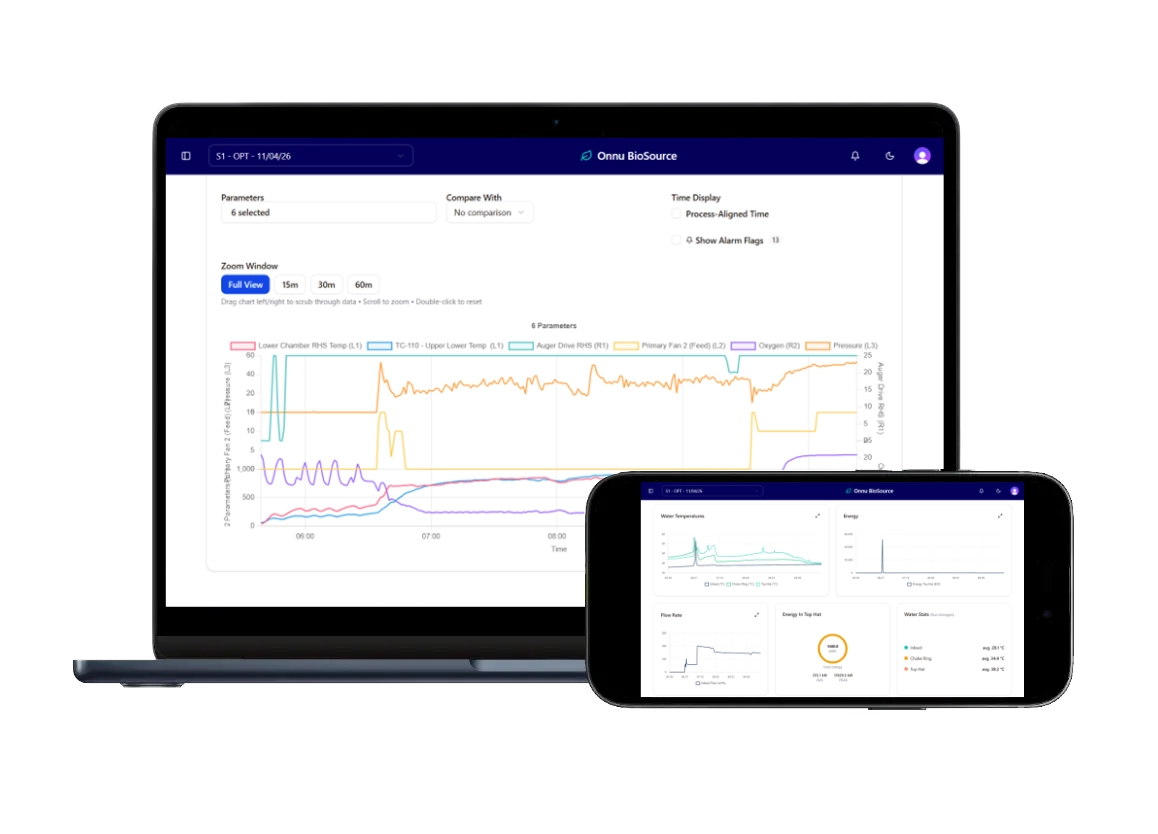
dMRV
All our systems come with Onnu Biosource, our bespoke dMRV system. Biosource records and analyzes all live and historical data for optimization and transfer to carbon registries.
Additional Options
If you would like us to install the whole plant, we can source other equipment to complete the functions required for your site. We only source high quality components with the same value-for-money principle as our own equipment.
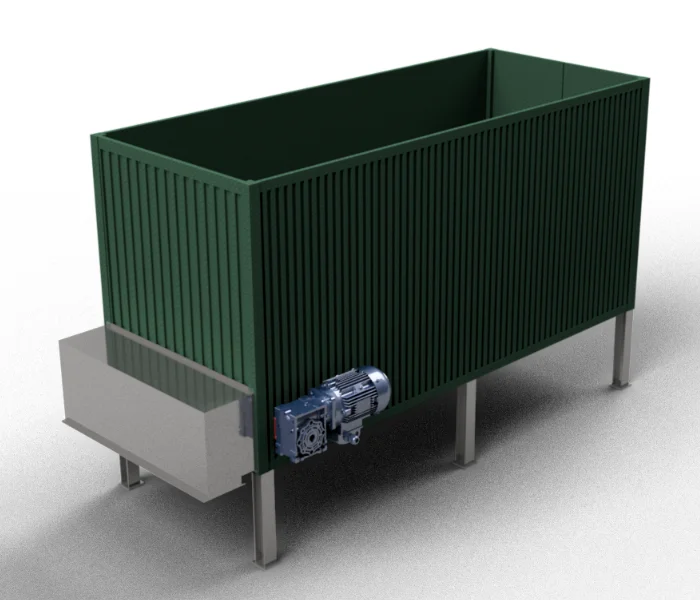
Walking Floor Container
For feedstock storage, walking floor containers are a convenient solution, automating the introduction of feedstock into the process.
Available in 20ft and 40ft sizes as required.
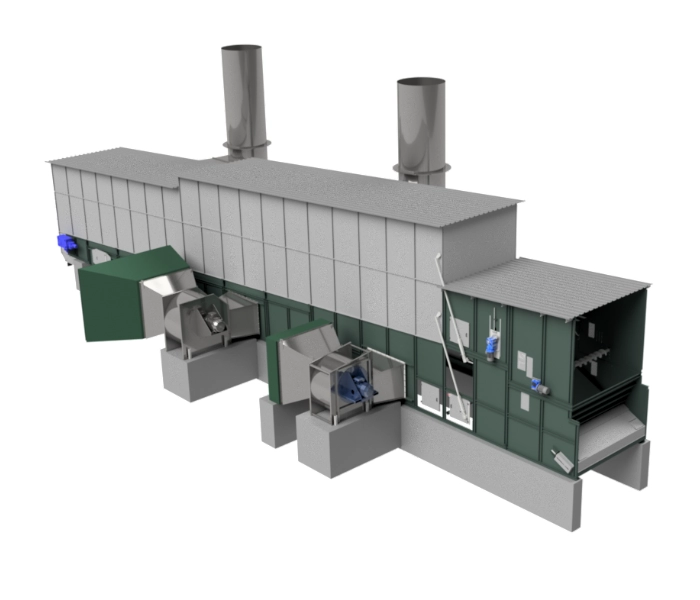
Dryer
For most feedstocks, a drying phase is required to optimize pyrolysis performance, powered by the heat energy from the pyrolysis process.
We can source a range of dryer options and manage heat integration.
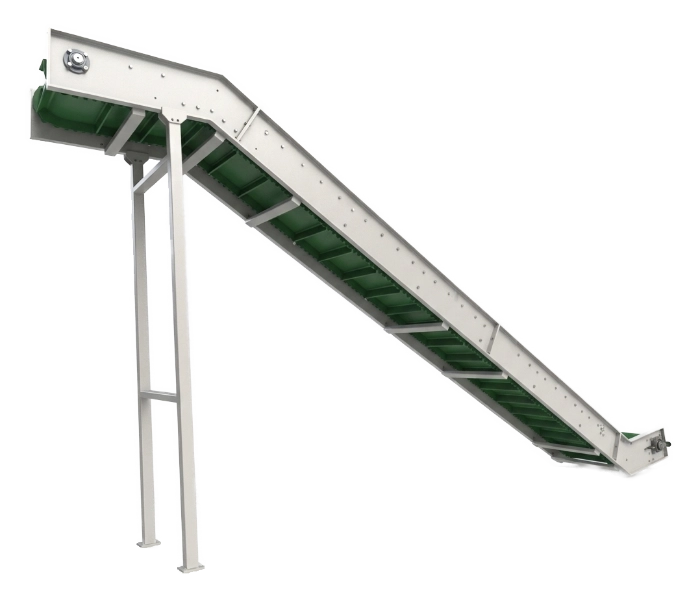
Belt Conveyor
Belt conveyors are used to move feedstock or biochar over longer distances.
We can source tailor made belt conveyors, depending on your site needs.
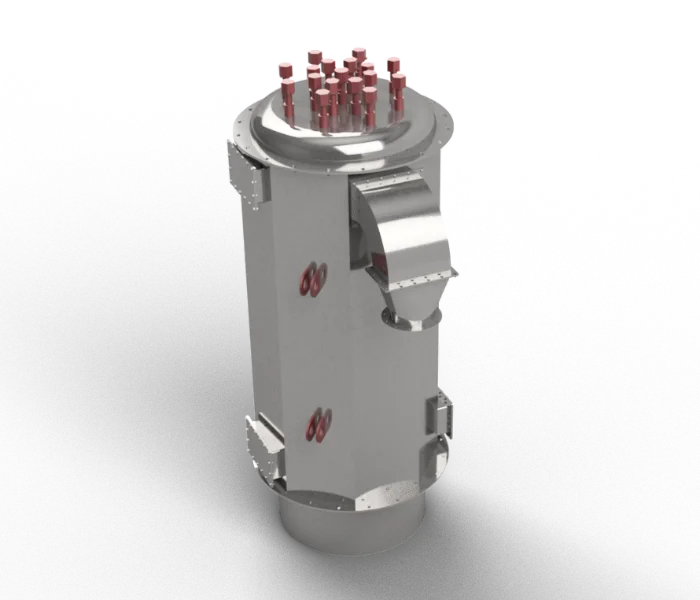
Heat Exchanger
A heat exchanger is used to transfer heat between process streams (hot flue gas, hot oil, vapour or cooling water) to recover energy.
The combusted hot flue gases carry significant amount of heat energy that is difficult to tap as is. Heat exchangers capture this energy and transfer it to water. It can then be utilised as per the site's requirements. The exact specifications of the heat exchanger depend on the amount of energy coming out from the flue gases and the desired efficiency and budgetary constraints.
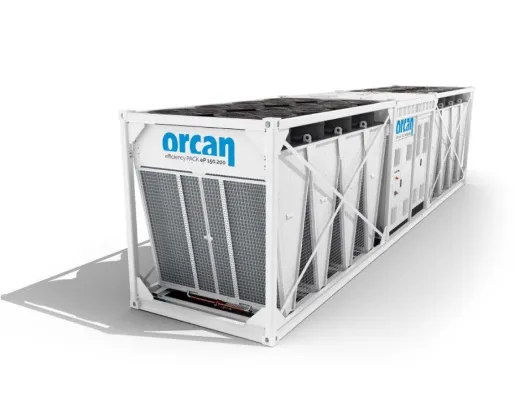
ORC Machine
An Organic Rankine Cycle (ORC) unit converts heat into electricity using an organic working fluid and a turbo-expander.
The energy captured from the flue gases, after being captured by the heat exchanger, can be further converted into electricity using an ORC unit. The exact specifications of the ORC unit depend on the amount of energy captured by the heat exchanger and the desired efficiency and budgetary constraints.

Abatement
For some feedstocks, additional measures need to be taken to keep emissions within permitted limits.
A wet scrubber uses a liquid (usually water) spray or packed-bed contact to capture soluble gases, acid vapours and fine particulates from pyrolysis flue gas. It’s used where efficient gas cooling and high removal of condensibles or soluble pollutants is needed before emission or further treatment.
Cyclones can be used to remove particulates from flue gases.
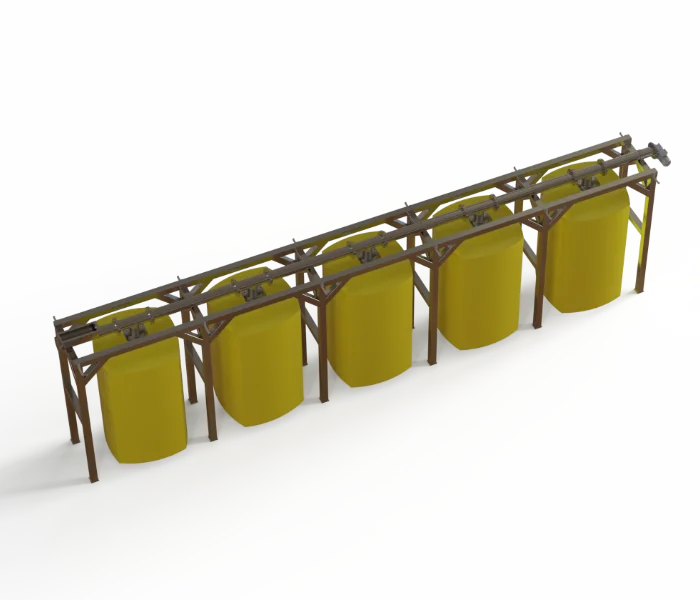
Bagging System
A bagging system is used to fill, seal and label finished products into bags of different size options. The quenched biochar can be directly bagged in required size and format (50L, small consumer bags, or bulk sacks) for retail or bulk dispatch. It’s used to automate packing, control weights, and speed up dispatch.
The exact specifications of the bagging system will depend on the discharge rate, sizing and labelling requirements.
Want to know how our technology measures up?
Find out in just five minutes with our CarboFlow CAPEX Calculator.
CarboFlow's features
Automation
Intelligent core, user-friendly touchscreens, real-time remote access - our software takes pyrolysis automation to the next level.
Green energy capture
Turn heat and syngas into value with CarboFlow’s integrated energy recovery system, reducing waste and powering operations sustainably.
Feedstock drive
CarboFlow's 20 auger drive system delivers uniform pyrolysis across diverse feedstocks, boosting efficiency, quality and consistency.
MRV
Transform raw machine data into real-time intelligence and optimization insights, for verified, audit-ready carbon credit MRV reporting across every pyrolysis run.
Want to discuss your pyrolysis project?
Our team can advise on site layout, feedstock viability, and how CarboFlow can help you
achieve your commercial and sustainability goals.